If your kids think “outside” is just a loading screen between Wi-Fi signals, this one’s for you. As a mom of three and a small-town nature wanderer, I’ve watched my kids come alive in the wild—muddy boots, rock collections clinking in their pockets, and those big, honest conversations that always seem to happen under trees, not ceilings. Today, I’m breaking down what the research actually says about kids, nature, and outcomes like school performance and mental health, why our family protects outdoor time like it’s the last pack of snacks on a road trip and great places for your family’s outdoor adventure in Nevada County.

The Case for Nature
Academics: A large study (over 3,200 kids, average age of 9) found that daily outdoor time is positively associated with academic performance—up to about 2.3 hours per day, at which point the benefit plateaus (not vanishes, just stops climbing).
Translation: regular outdoor time helps; cramming a whole weekend into one mega-hike won’t turn algebra into poetry, but consistent exposure matters.
Green-at-School = Better Scores: Research tying trees and green views around schools to improved standardized test performance and semester grades keeps stacking up—suggesting everyday access to green space supports learning.


Mental Health & Attention: Reviews across dozens of studies show that time in nature is linked with lower stress, less depression and anxiety, and better cognitive function in children and teens. Some work even shows improvements in ADHD symptoms after nature exposure (yes, even short walks help focus).
Screens vs. Scenes: Balanced tech use isn’t the enemy, but higher outdoor time + sensible screen time tend to correlate with better health and attention. Recent studies connect outdoor activity and moderated screens with healthier outcomes in young kids—and they’re being studied post-pandemic for exactly this reason.
Doctors Are Prescribing Parks: From the American Academy of Pediatrics’ environmental health guidance to growing “park prescription” programs, clinicians are nudging families outside for tangible health benefits. It’s not a fad; it’s a prescription without the pharmacy line.

What This Looks Like for Us
We do regular family outings into the great outdoors because:
The kids open up.
Give them a trail and a little one-on-one with me or my husband, and suddenly they’re telling us everything—from friend drama to Big Life Questions. No stage lights, no pressure—just pine needles and honesty.
We collect rocks.
Each one has to be heavily inspected to be sure it sparkles just right and yes, I have become the kind of mom who can identify raw quartz with suspicious confidence.
We take pictures.
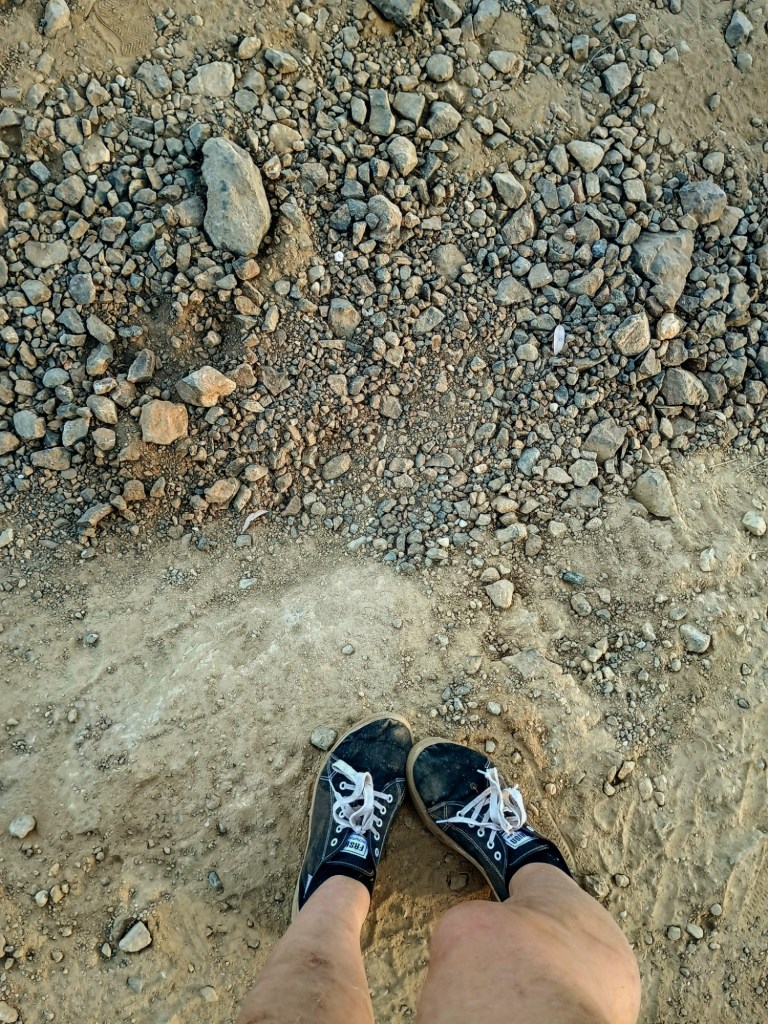
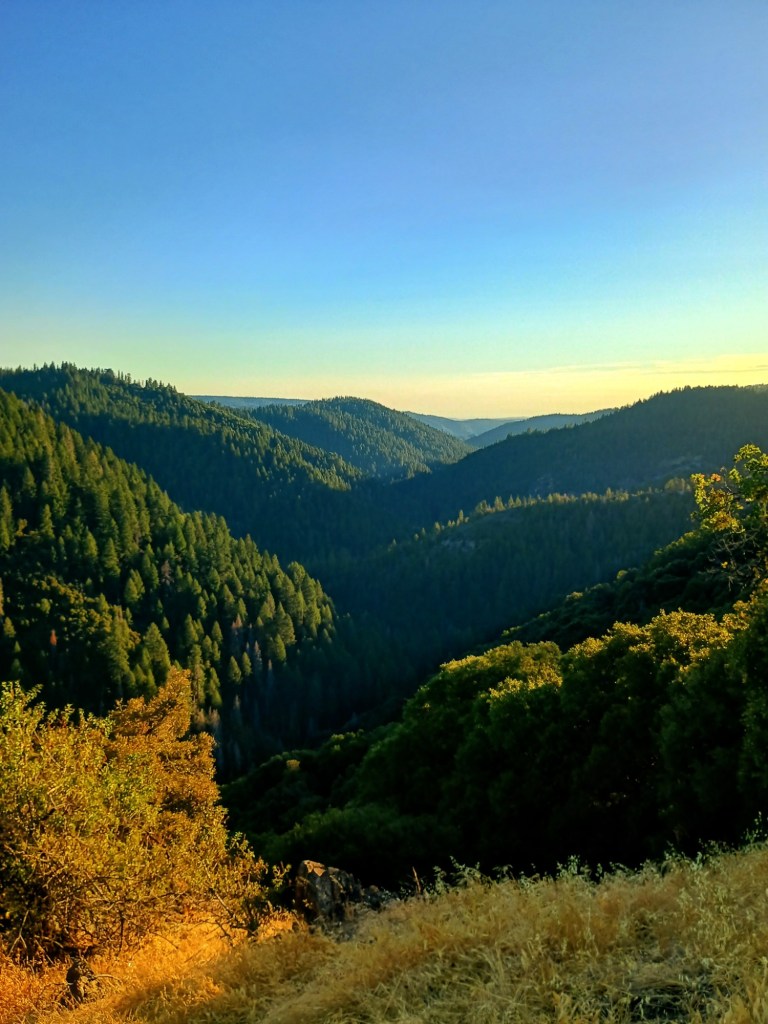
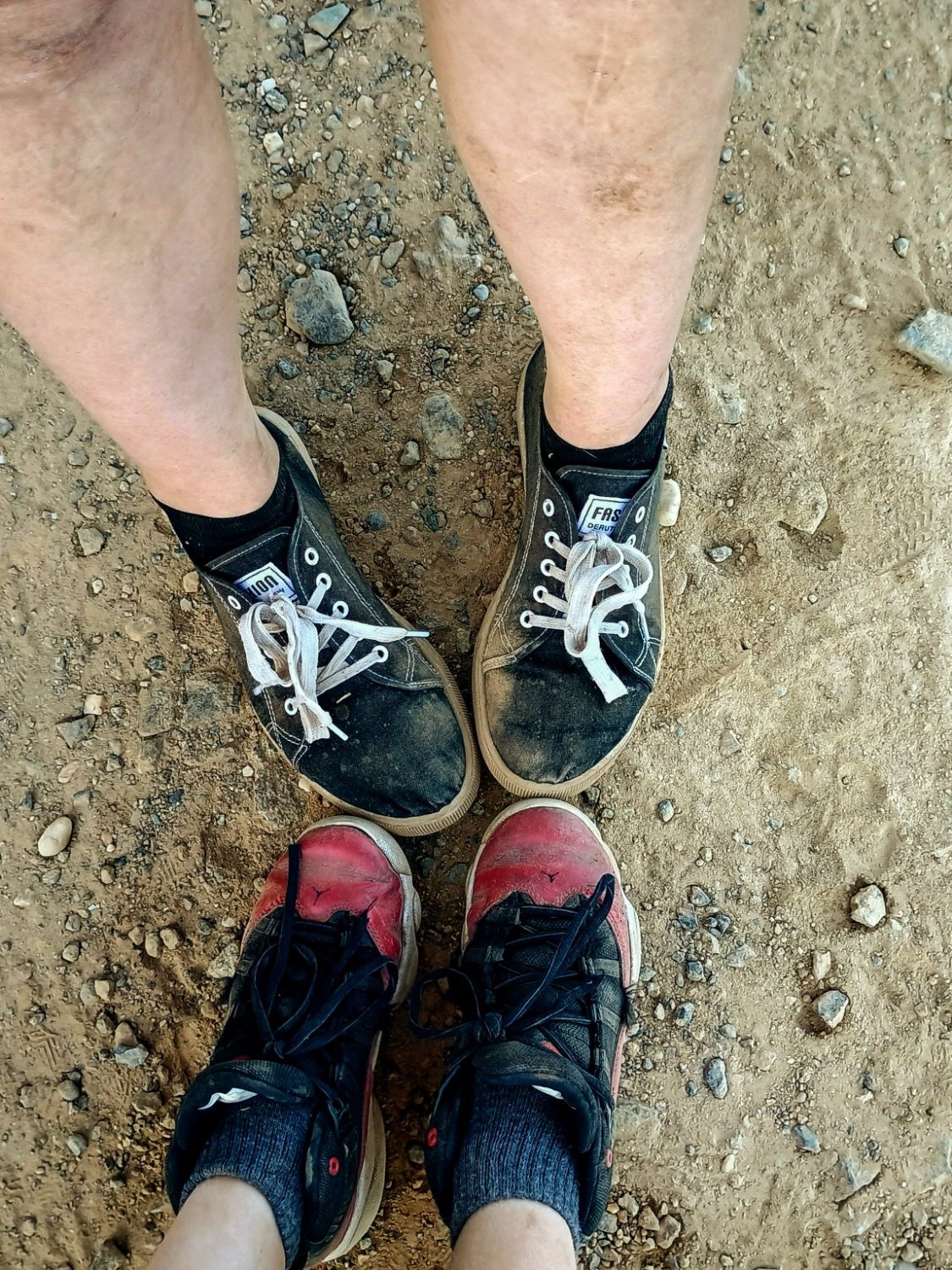
Of just about anything but mostly the skyline, the ground, and wildflowers.When my son is feeling like being silly with me we even take pictures of our very dirty shoes.
How to Make Going Outside a Habit
Anchor it to something you already do. Post-dinner 20-minute walk, Saturday morning trail loop, or a quick “leaf-hunt” on school days.
Pack light but smart. Water, snack, tiny first-aid kit, a phone for photos, and a bag for rock… I mean treasures.
Let kids lead. Trail choice, photo subjects, which rock is “the one.” Autonomy fuels engagement.
Green the routine. If trails are tricky mid-week, look for green routes to school, parks with trees, or even homework by a window with a leafy view (yes, it helps).
Nature Meet-and-Greets in Nevada County
Independence Trail at the South Yuba River State Park:
It’s wheelchair-accessible with scenic spots just made for rock-hunting, wildflower spotting, and spontaneous mini rock-collection ceremonies.
Deer Creek Tribute Trail:
A longer option—about 8 miles—but totally customizable. Choose a manageable loop or out-and-back spur for short legs and big discoveries.
Sugarloaf Mountain near Nevada City:
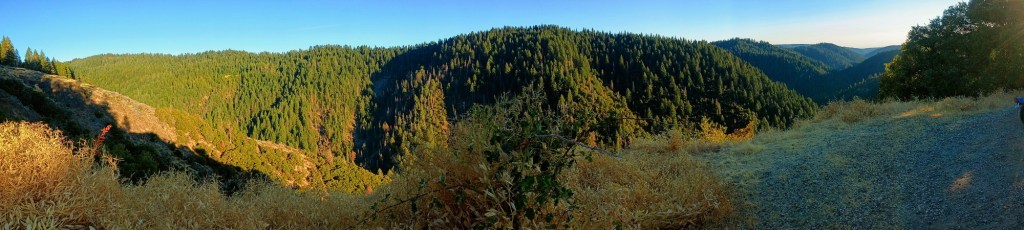
A short but rewarding climb (5–10 minutes) leads to sweeping treetop views and a chance to play “I spy”—especially on those foggy mornings when the valley looks like a cloud soup.

If you want your kids getting better grades, having calmer minds, and more of those rare parent-kid conversations that skip small talk and go straight to the good stuff—start with more green time. It doesn’t have to be a summit; it can be a sidewalk lined with trees, a pocket park, or a slow loop around your block.
The magic isn’t the mileage—it’s the habit.
Enjoyed this post?
Subscribe for more family-first, small-town-smart ideas


What’s your take? Drop it below!