If you’ve ever found yourself Googling “how many activities is too many?” while frantically packing snacks for soccer, piano, and the meltdown happening in the backseat—you’re not alone. And hey, you’re not a bad parent for wanting to give your kids all the things. But here’s the new reality check from pediatric pros, child psychologists, and (if we’re being honest) our own gut instincts: kids don’t need more… they need less.
Less structure. Less rushing. Less punishment. And a whole lot more space to just be kids.
So let’s break down what’s trending in parenting right now and how we can apply it to our lives—without losing our minds (or our calendars).

Overscheduled = Overstimulated
The latest buzz in parenting circles isn’t about what more we can add—but what we can take away. Pediatric nurse practitioners are sounding the alarm on kids being shuffled from one activity to the next with little time to rest, reset, or even be bored (which, yes, is healthy).
“One activity at a time,” says Mary Catherine, a pediatric NP who’s gone viral for her common sense advice.
“Kids need time to regulate, be creative, and actually enjoy their childhood.”
And guess what? Research backs her up. Overscheduled kids have been shown to struggle with anxiety, sleep problems, stomachaches, and a lack of emotional regulation.
Meanwhile, kids who engage in risky, unstructured play (think climbing, exploring, building forts out of laundry) show better decision-making, social skills, and stress resilience.
Basically: less time in the car = more time building actual life skills.
A Balanced Week: Play Meets Purpose
Here’s a simple weekly rhythm you can follow to help your child thrive without feeling like a cruise director:
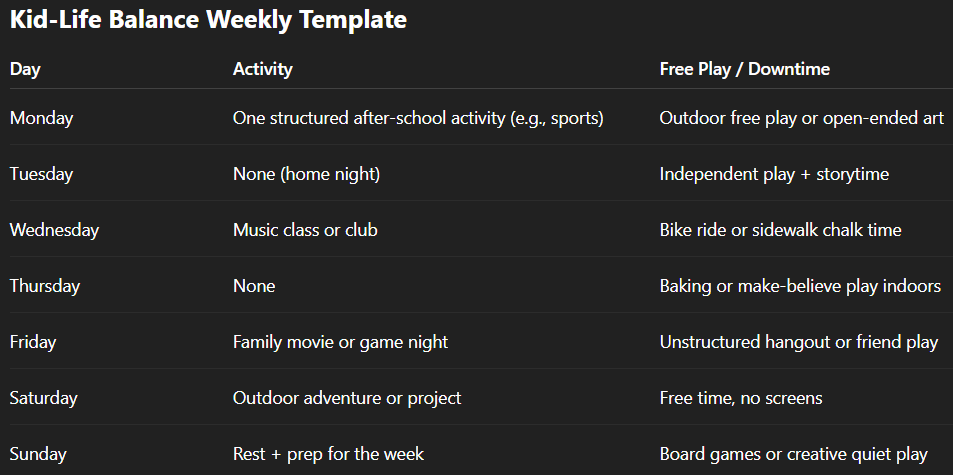
Reminder:
If you’re seeing meltdowns, clinginess, or school resistance—check their schedule. It might be too full.
Discipline:
It’s Not About Power, It’s About Partnership
Gone are the days of timeouts and yelling being the default. The most effective, research-backed approach today?
Positive discipline—a method that’s kind, firm, and rooted in helping kids understand, not fear.
Real-Life Discipline Scenarios
Scenario 1: Your child hits their sibling
“I can see you’re angry. It’s okay to feel mad, but it’s not okay to hit. Let’s talk about what made you feel this way and find a better way to handle it next time.”
Scenario 2: Your child refuses to clean up
“I understand you don’t want to clean up. But part of playing is putting things away after. Let’s do it together, and then you can pick the next activity.”
Scenario 3: Your child talks back
“I hear that you’re upset. I want to understand, but I also expect respectful words. Let’s take a break and try again when we’re both calm.”
Scenario 4: A tantrum in public
“You’re having a big feeling right now. I’m here. Let’s take some deep breaths together. We’ll figure it out.”
Why It Works:
Builds long-term emotional regulation
Encourages problem-solving and accountability
Maintains the parent-child bond, even in tough moments
Studies have shown that kids raised with this kind of guidance—not harsh punishment—are more likely to:
Have better academic outcomes
Regulate their emotions effectively
Form healthy relationships
Show lower rates of aggression and defiance
And as for us parents? Positive discipline has been shown to increase confidence, reduce yelling, and improve parent-child relationships.
Win. Win. Win.

There’s no perfect way to parent—but there is a better way to balance structure with freedom, guidance with kindness, and expectations with empathy. Your child doesn’t need a stacked calendar or a reward chart to learn and grow—they need you to show up, set fair limits, and connect with compassion.
Want more tips, templates, and real-life stories from a small-town mama learning right alongside you?
Subscribe and get all the best parenting hacks and more sent straight to your inbox!


What’s your take? Drop it below!